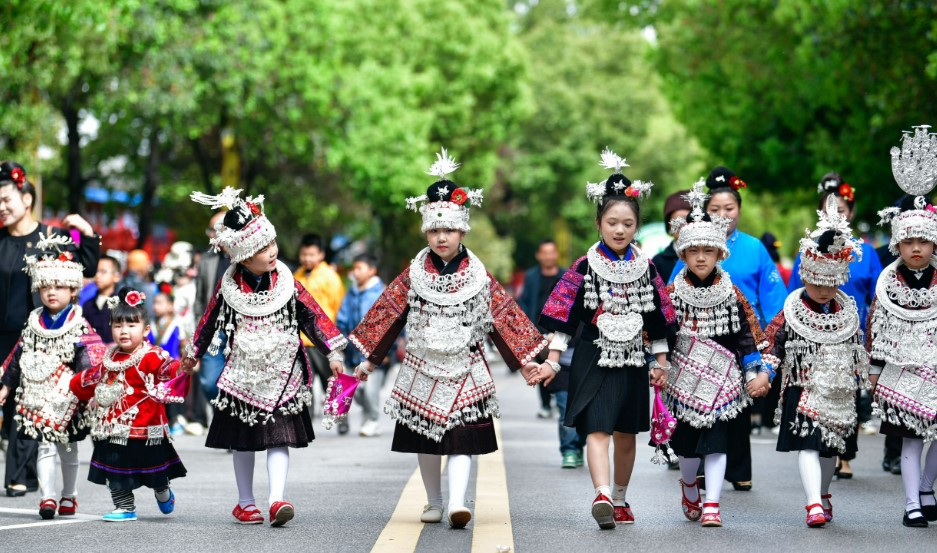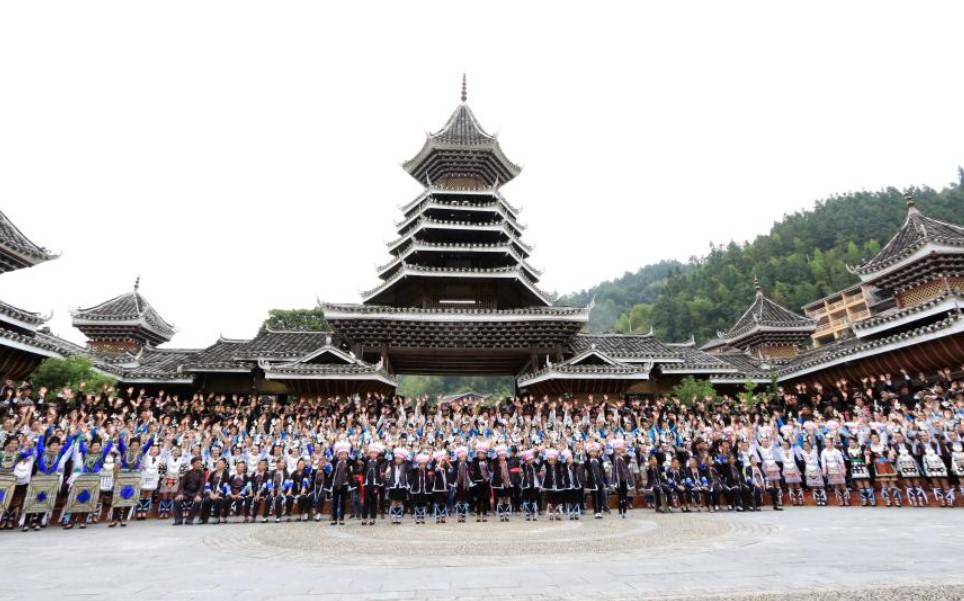
On August 23, the solar term known as “Chushu” (End of Heat), Zhaoxing Dong Village in Liping County, Qiandongnan Miao and Dong Autonomous Prefecture, Guizhou Province, welcomed its annual “Chushu Song Festival.” As the morning mist had yet to dissipate, men, women, and children dressed in indigo Dong costumes had already gathered on the bluestone square before the drum tower. With three resounding beats of the massive drum, a folk ceremony spanning hundreds of years officially commenced.
This year’s festival attracted over thirty song teams from more than ten surrounding Dong villages. Song master Wu Yinhua, seventy-two years old this year, led her “Yueye Song Team” in a forty-minute polyphonic grand chorus at the center of the square. “Once Chushu passes, the rice will ripen,” Wu said, adjusting the silver ornaments on her head as she spoke to reporters. “Dong families have followed the old custom of singing to honor heaven and pray for a bountiful harvest on Chushu since ancient times. There are no instruments in the grand song—it relies on multi-part choral singing passed down through generations. Seven vocal layers interweave, just like the terraced fields stacked upon one another.”
In addition to performances of the Dong Grand Song—a world-class intangible cultural heritage—the event featured hands-on experience zones for traditional crafts such as “pounding glutinous rice cakes,” “weaving rice-fish cages,” and “spinning Dong cloth.” Mr. Zhang, a tourist from Guangdong, attempted a Dong love song duet under the guidance of local singers, drawing laughter from the surrounding crowd. “Though I don’t understand the lyrics, that sound which seems to grow straight from the earth is deeply moving,” Zhang said.
Yang Xiuming, director of the Liping County Intangible Cultural Heritage Protection Center, explained that in recent years, the local government has adopted a “solar term + folk custom + tourism” model, integrating the traditional song festival with modern agricultural harvest celebrations. This approach preserves core rituals such as “honoring heaven and earth” and “sacrificing to the grain god,” while incorporating new compositions by young song teams that reflect themes of rural revitalization. “We are not protecting culture in a museum; we are keeping the Dong Grand Song alive in contemporary life,” Yang said.
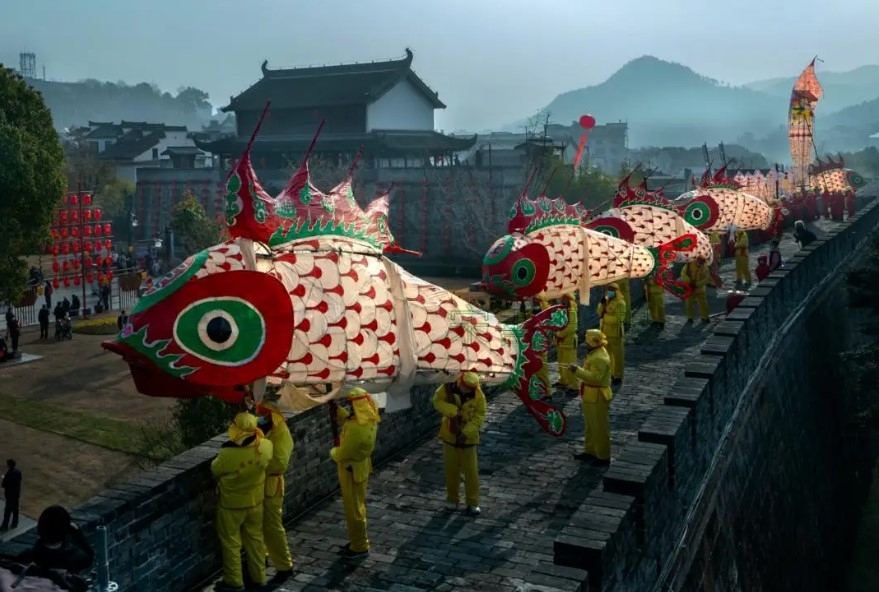
The Chushu Song Festival will last for three days, during which traditional social activities including “drum tower song duels” and “Xingge Zuoyue” (a traditional courtship custom) will also be held. As night falls, thousands of hand-crafted Dong lanterns will illuminate the village, as song and the fragrance of rice intertwine to compose a Chushu tableau of a millennia-old Dong village.